Delving into Personal Injury Lawyer Guide: Maximize Your Settlement Fast, this introduction immerses readers in a unique and compelling narrative, with a casual formal language style that is both engaging and thought-provoking from the very first sentence.
In the following paragraphs, we will explore key aspects of the role of personal injury lawyers, factors to consider when choosing one, steps to take after an injury, strategies to maximize your settlement, and understanding settlement offers.
Overview of Personal Injury Lawyers
Personal injury lawyers play a crucial role in the legal process of settling claims for individuals who have been injured due to the negligence of others. They specialize in handling cases related to accidents, medical malpractice, workplace injuries, and more.
Benefits of Hiring a Personal Injury Lawyer
- Expertise: Personal injury lawyers have a deep understanding of personal injury laws and legal procedures, which can be complex and overwhelming for individuals without legal experience.
- Negotiation Skills: These lawyers are skilled negotiators who can advocate on your behalf to ensure you receive fair compensation for your injuries.
- Investigation: Personal injury lawyers will conduct a thorough investigation of your case, gathering evidence and information to support your claim.
- Legal Representation: Having a lawyer represent you in court or during settlement negotiations can improve your chances of maximizing your settlement.
How a Personal Injury Lawyer Can Help Maximize Your Settlement Fast
Personal injury lawyers are adept at evaluating the value of your claim based on factors such as medical expenses, lost wages, pain and suffering, and future damages. They can negotiate with insurance companies and other parties involved to expedite the settlement process and secure the best possible outcome for you.
Factors to Consider When Choosing a Personal Injury Lawyer
When selecting a personal injury lawyer, there are several key factors to keep in mind to ensure you maximize your chances of a successful outcome in your case.
Experience and Specialization
One of the most important factors to consider is the lawyer’s experience and specialization in personal injury cases. An attorney who has handled similar cases to yours will have the expertise and knowledge needed to navigate the complexities of personal injury law effectively.
Fees and Payment Structures
It is essential to compare the fees and payment structures of different personal injury lawyers before making a decision. Some lawyers work on a contingency fee basis, meaning they only get paid if you win your case. Others may charge an hourly rate or a flat fee.
Understanding the fee structure upfront can help you avoid any surprises later on.
Steps to Take After an Injury
After sustaining a personal injury, it is crucial to take immediate action to protect your rights and ensure a successful case outcome. One of the most important steps is documenting evidence to support your claim and avoid common mistakes that could jeopardize your settlement.
Documenting Evidence
- Take photos of the accident scene, your injuries, and any property damage.
- Collect contact information from witnesses who saw the incident.
- Keep all medical records, bills, and receipts related to your injury and treatment.
- Write down detailed notes about the accident, including what happened before, during, and after.
Protecting Your Rights
- Avoid discussing the incident with the other party’s insurance company without legal representation.
- Do not sign any documents or accept a settlement offer without consulting a personal injury lawyer.
- Follow your doctor’s treatment plan and attend all medical appointments to show the severity of your injuries.
Avoiding Common Mistakes
- Delaying seeking medical treatment or legal advice after an injury.
- Posting about the accident on social media, as it could be used against you in court.
- Failing to report the incident to the appropriate authorities, such as the police or your employer.
Maximizing Your Settlement
When it comes to maximizing your settlement in a personal injury case, there are several crucial strategies to consider. By strengthening your case, employing effective negotiation tactics, and understanding the importance of timing, you can increase the likelihood of receiving the compensation you deserve.
Strategies to Strengthen Your Personal Injury Case
- Gather evidence promptly, including medical records, witness statements, and documentation of the accident scene.
- Consult with experts, such as medical professionals or accident reconstruction specialists, to support your claim.
- Keep detailed records of all expenses related to your injury, including medical bills, lost wages, and any other financial losses.
- Follow your healthcare provider’s treatment plan diligently to demonstrate the extent of your injuries and the impact on your daily life.
Negotiation Tactics to Maximize Your Settlement Amount
- Present a clear and compelling demand letter outlining the damages you are seeking and the basis for your claim.
- Be prepared to negotiate with insurance adjusters, highlighting the strength of your case and the evidence supporting your claims.
- Consider engaging a skilled personal injury lawyer to handle negotiations on your behalf and advocate for your best interests.
- Stay firm on your desired settlement amount while remaining open to reasonable compromises during the negotiation process.
The Importance of Timing in Settling a Personal Injury Claim
- Act promptly to file your claim within the statute of limitations to avoid missing out on the opportunity to seek compensation.
- Avoid settling too quickly before fully understanding the extent of your injuries and the long-term implications on your health and finances.
- Consider waiting until reaching maximum medical improvement to ensure all future medical expenses and ongoing care are accounted for in your settlement.
- Consult with legal counsel to determine the optimal timing for settling your personal injury claim based on the specifics of your case.
Understanding Settlement Offers
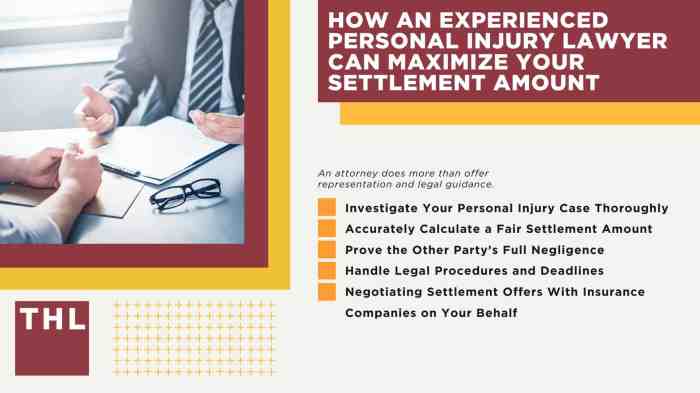
In personal injury cases, a settlement offer is a proposal made by the at-fault party or their insurance company to compensate the victim for their injuries and damages without going to trial. Understanding what a settlement offer typically includes, how to evaluate and negotiate it, as well as the factors affecting its value, is crucial for maximizing your compensation.
What a Settlement Offer Typically Includes
A settlement offer usually includes:
- The amount of money the at-fault party is willing to pay to resolve the claim.
- A release of liability, stating that the victim agrees not to pursue further legal action related to the incident.
- Any conditions or terms attached to the settlement, such as confidentiality agreements.
Evaluating and Negotiating a Settlement Offer
When evaluating a settlement offer, consider the following:
- Assessing the total value of your damages, including medical expenses, lost wages, pain and suffering, and future costs.
- Comparing the offer to similar cases and verdicts to determine if it is fair and reasonable.
- Weighing the risks and benefits of accepting the offer versus going to trial.
Remember, you have the right to negotiate the terms of a settlement offer. If you feel the offer is inadequate, you can counter with a higher amount or request changes to the terms.
Factors Affecting the Value of a Settlement Offer
Several factors can influence the value of a settlement offer, including:
- The severity of your injuries and the extent of your medical treatment.
- The strength of the evidence supporting your claim, such as witness statements and medical records.
- The insurance policy limits of the at-fault party and their willingness to negotiate.
- The reputation and track record of your personal injury lawyer in handling similar cases.
End of Discussion
In conclusion, the guide to maximizing your settlement fast with a personal injury lawyer is a dynamic process that requires careful consideration and strategic planning. By following the Artikeld steps and tips, you can navigate the complexities of personal injury claims with confidence and optimize your chances of a favorable outcome.
Question Bank
What should I do immediately after sustaining a personal injury?
After an injury, seek medical attention, document the incident, and consult with a personal injury lawyer as soon as possible to protect your rights and build a strong case.
How can I evaluate and negotiate a settlement offer?
To evaluate a settlement offer, consider factors like medical expenses, lost wages, pain and suffering. Negotiate by presenting strong evidence, understanding the offer’s value, and seeking legal advice if needed.
What factors can affect the value of a settlement offer?
Factors like the severity of injuries, liability, insurance coverage, and comparative negligence can influence the value of a settlement offer in a personal injury case.